Washington Schools:
Underfunded & Overburdened
Post McCleary “solution,” the state still hasn’t met its constitutional duty to fully fund public education and schools are being asked to do more now than ever before.
The Core Issues

The cost of running schools continues to increase dramatically, while state funding for schools has fallen far behind.
Apple with one bite taken out of it

The “one-size-fits-all” school funding formula is inadequate and outdated.
Apple with two bites taken out of it

Local levies are filling funding gaps they were never intended to fill and creating inequities for districts that can't pass them.
Apple with three bites taken out of it

New mandates don’t come with new funding, and school districts lack the resources to do it all.
Apple core with 4 bites taken out ofit
Apple core with four bites taken out of it
A Smaller Piece of the Pie for K-12
As Washington State’s operating budget has increased, the percentage dedicated to funding K-12 education has not kept up. About five years ago, about 51.6% of the state’s general fund budget was dedicated to K-12 education. Now, it’s down to about 43.23%, even though costs continue to rise.
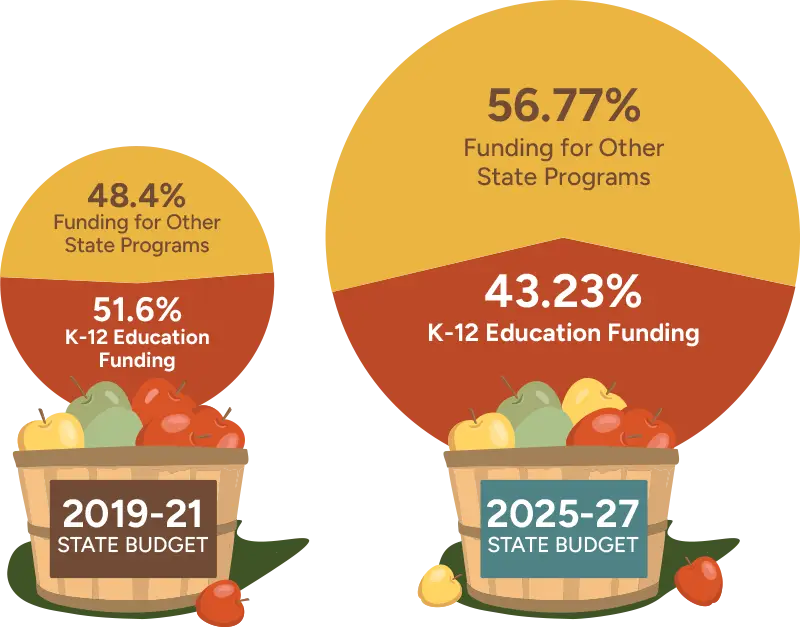
Washington State’s Operating Budget Over Time
Where State Funding Falls Short: The Big 3
Funding for at least three major components of basic education, including Special Education, Student Transportation, and Materials, Supplies, and Operating Costs (MSOC), continues to be dramatically underfunded.
Education Funding Deficits by Year
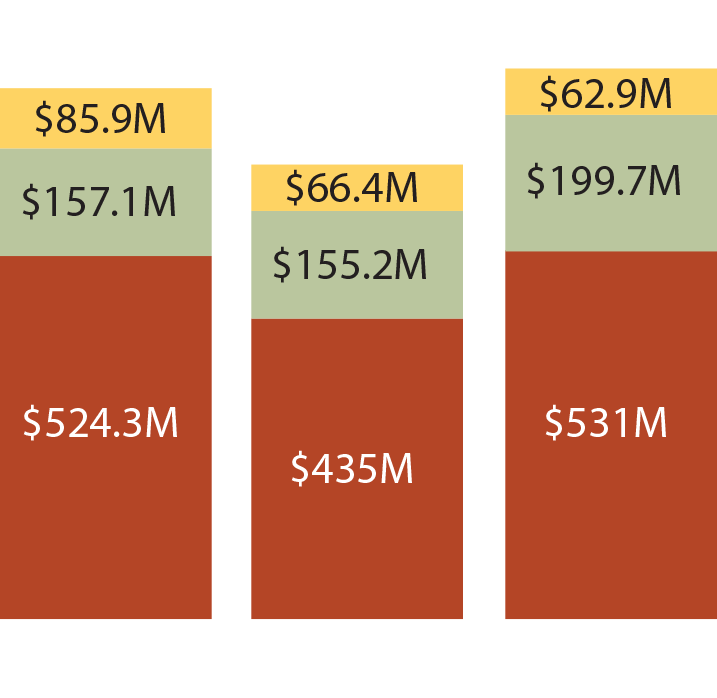
Total underfunding of the Big 3 is almost $800 million in 2024-25:

Rising Operating Costs
Basic School Operating Costs Are Not Fully Funded by the State
Electricity to power classrooms, heat for school buildings, insurance for the unexpected, curriculum for classrooms. These “must-have” costs are categorized as Materials, Supplies & Operating Costs (MSOC). MSOC expenses continue to rise with inflation, yet state-provided funding has not kept pace.
While Washington’s 2025-27 Operating Budget included an attempt to add funding for MSOC expenses – an $80 million statewide increase spread across two years, it wasn’t nearly enough.
Food, fuel, and utility costs have soared since 2018
Daily household expenses are far more expensive today than they were just a few years ago. Just like Washington residents, schools are feeling the pinch of these rising costs too and shouldn’t have to rely on local levies or reserves just to pay the electric bill or cover insurance costs.
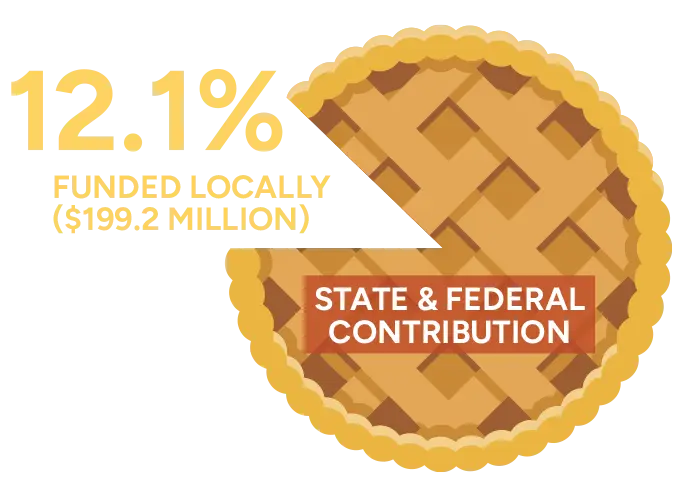
MSOC Funding Gap 2024-25 school year

The Core Issue
Click to find out!The Core Issue
These expenses fit squarely within the definition of “basic education,” for which the state is required to provide ample funding.
Average increase in the cost of milk since 2018
(Click to read more)
Average increase in the cost of ground beef 2018
(Click to read more)
Average increase in the cost of diesel fuel since 2018
(Click to read more)
Average increase in electricity costs since 2018
(Click to read more)
Average increase in the cost of natural gas since 2018
(Click to read more)

Special Education
Special Education is Still Not Fully Funded by the State
Serving students with disabilities is not optional – it’s a moral, legal and constitutional requirement. In the 2024-25 school year, $531 million in special education expenses were left unfunded by the state.
The state provided districts an average 6.16% increase in state funding in 2025-26, but that funding wasn’t nearly enough to account for the millions left unfunded. Further, this increase doesn’t account for inflation.
Example districts
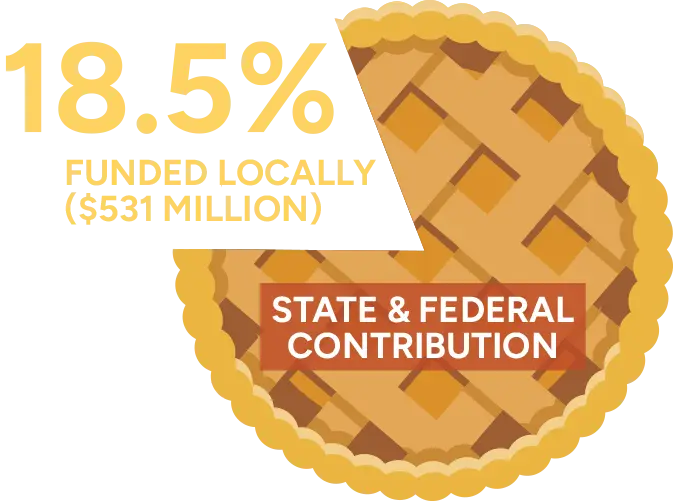
School District in King County
(2024-25 Special Education)
$47.66 million (State funding)
– $78.63 million (Expenditures)
– $30.97 million
(Unfunded special education expenses)
School District in Clark County
(2024-25 Special Education)
$63.5 million (State funding)
– $85.6 million (Expenditures)
– $22.1 million
(Unfunded special education expenses)
The Core Issue
Click to find out!The Core Issue
School districts shouldn’t have to rely on local levies and reserves to cover basic education costs like special education staff and legally required student supports.

Student Transportation
Student Transportation is Not Fully Funded by the State
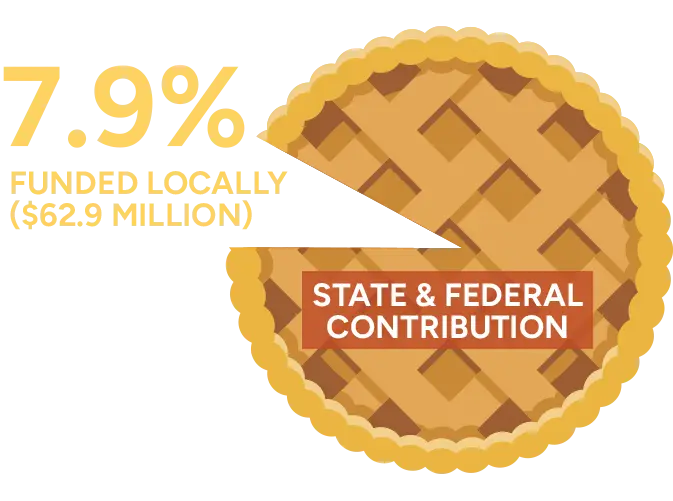
In the 2024-25 school year alone, $62.9 million in statewide school transportation expenses were left unfunded by the state.
State funding for student transportation follows a one-size-fits-all formula to hire and pay bus drivers, and pay for fuel, maintenance, and vehicle depreciation. Yet, transportation costs vary widely from district to district based on city/rural routes, number of bus stops, terrain, and number of students in need of specialized transportation.
Example districts
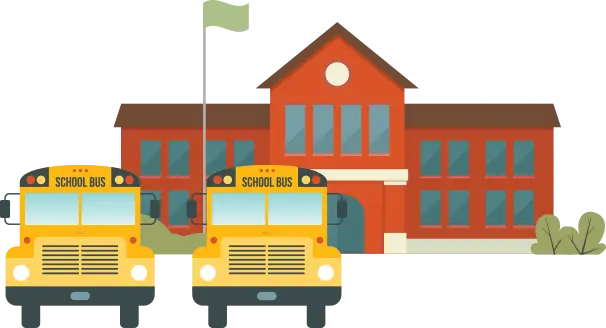
School District in Spokane County
(2024-25 Transportation)
$16.4 million (State funding)
– $17 million (Expenditures)
– $600,000
(Unfunded transportation expenses)
School District in Stevens County
(2024-25 Transportation)
$1.6 million (State funding)
– $1.73 million (Expenditures)
– $130,000
(Unfunded transportation expenses)
The Core Issue
Click to find out!The Core Issue
School districts should not have to rely on local levies and reserves to cover the basic costs of transporting students to and from school. These expenses fit squarely within the definition of “basic education,” for which the state is required to provide ample funding.

State Mandates
State Mandates for Public Schools Are Not Fully Funded
Schools are required to do and report hundreds of things without resources to support these mandates. While these requirements are often well-intended, unfunded mandates strain district budgets and can pull resources away from other essential services. Some examples include:
…And many more.
Source: Marie Sullivan Public Affairs Corporation

How school districts are communicating about school funding gaps
Districts across Washington are advocating for change in a variety of ways:
- Bellingham School District – Board Resolution
- Bellingham School District – Public Letter
- Bellingham School District – Op-Ed
- Oak Harbor Public Schools – Letter to Representative Shavers
- Toutle Lake School District – Funding Letter for Small Schools to State Legislators and Budget Negotiators
- West Valley School District – 2026 Legislative Advocacy
- Yakima School District – 2026 Legislative Priorities
How WASA is amplifying the message:
Legislator Information
To find the legislators for your district, enter your address into the state’s Find My District online tool, or call 1-800-562-6000.

Sponsored by the Washington Association of School Administrators (WASA).